Powder Filling Machines: Auger Dosing and Weight Control
How do powder fillers work? Understand auger dosing, weighing, bulk-density changes and practical product trials before choosing a machine.
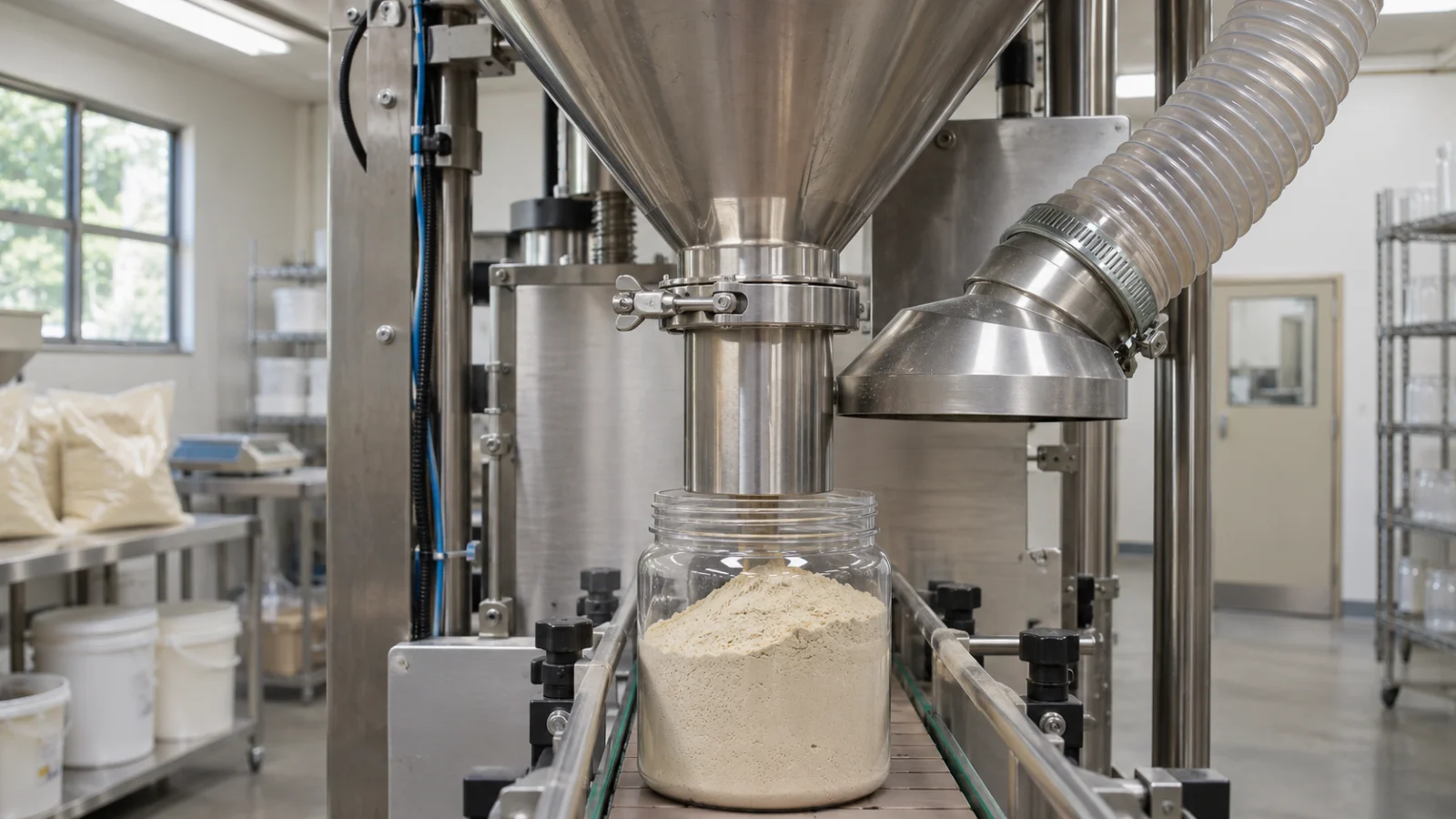
A powder filling machine feeds product, establishes a dose and transfers it into a container. An auger moves powder with a screw; weight-controlled filling monitors mass. These are not necessarily competing machine categories: auger feeding and weighing feedback can operate in the same system.
Do not select a filler only by its nominal gram range. Flour, spices, protein powder and granules may differ in flow, dust generation and compaction. An identical target weight does not establish that the same feeding arrangement is suitable.
How does an auger powder filler meter a dose?
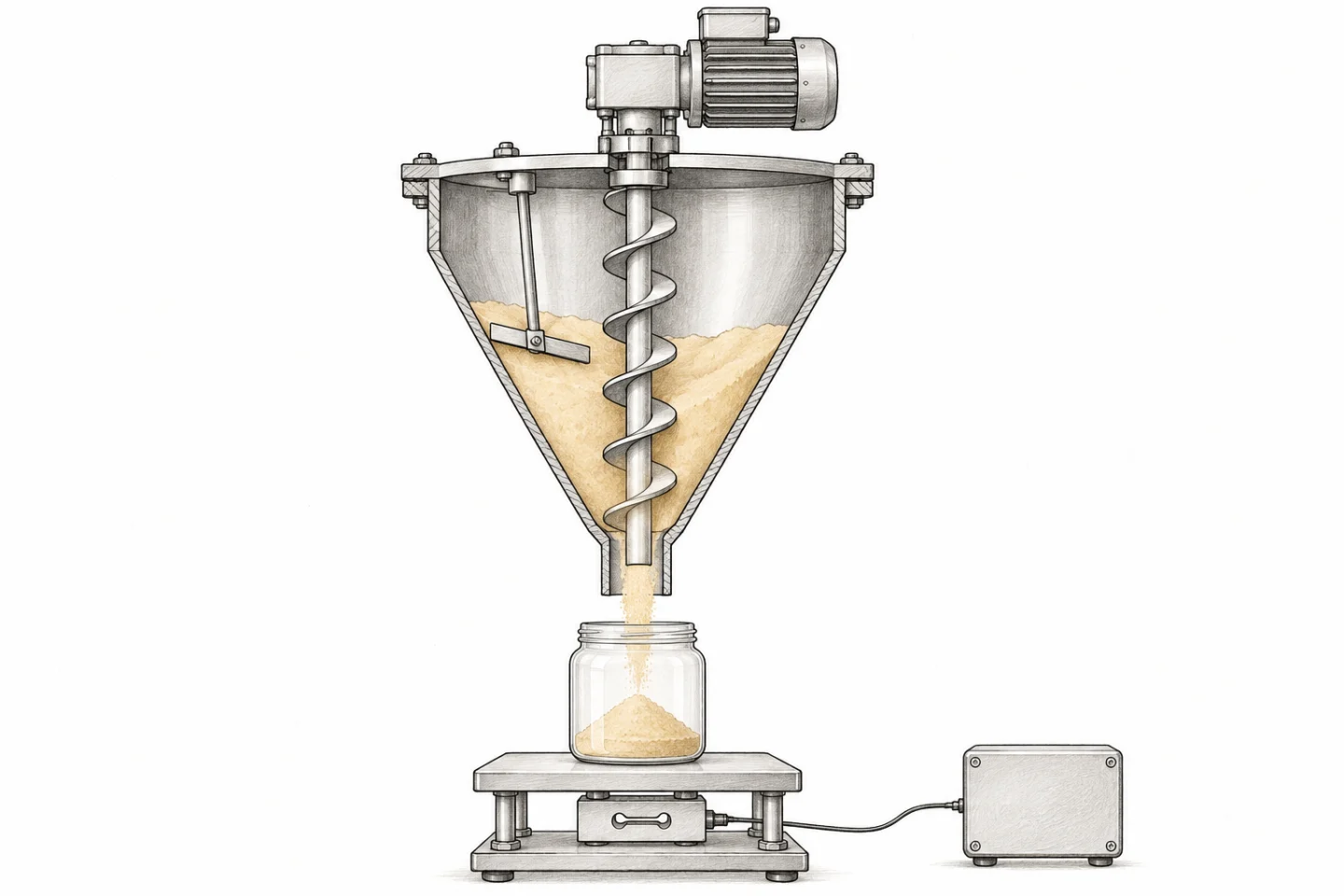
A motor rotates the screw to move powder towards the outlet. A volumetric application uses revolutions or controlled movement to establish the dose. The same movement does not guarantee identical mass when powder bulk density changes.
Manufacturer examples of product-dependent auger and hopper arrangements appear in Nalbach's auger filler information and All-Fill's technical explanation. Individual equipment performance figures should not be treated as universal powder-filling specifications.
Is weight filling always the better choice?
Weighing helps control actual mass. A dose can be prepared in a separate weigh hopper or measured as it enters the container. Feeding may still use an auger, a vibratory channel or another suitable device. The nVenia net-weigh system is one manufacturer example of combining weighing and feeder choices.
Vibration, container tare, settling time and material falling after shut-off can affect the result. The presence of a load cell does not guarantee the same tolerance at every speed. Agree acceptance criteria and verify them using the actual product.
Why can weight vary without a setting change?
Simplified example: Assume an effective dose volume of 100 cm³. At a bulk density of 0.50 g/cm³ it represents 50 g; at 0.60 g/cm³ it represents 60 g. This illustrates mass versus volume, not the measured performance of a machine.
Opening a sack, aerating material, letting it settle in the hopper or changing batches can alter filling behaviour. Before adjusting the machine, record feeding conditions, hopper level and recent changes. Review consecutive-fill variation rather than relying only on the average.
Can flour and spices use the same screw?
Sometimes, but suitability should be demonstrated. Bridging, adhesion, lumps, particle size and container opening all affect the decision. A feeding arrangement that compresses a fragile granular product may damage its appearance.
An outlet arrangement that stops one product cleanly may dribble or accumulate material with another. Ask which change parts are required, how they are cleaned and how long it takes to reach an acceptable first fill after changeover.
What should a powder-filling trial record?
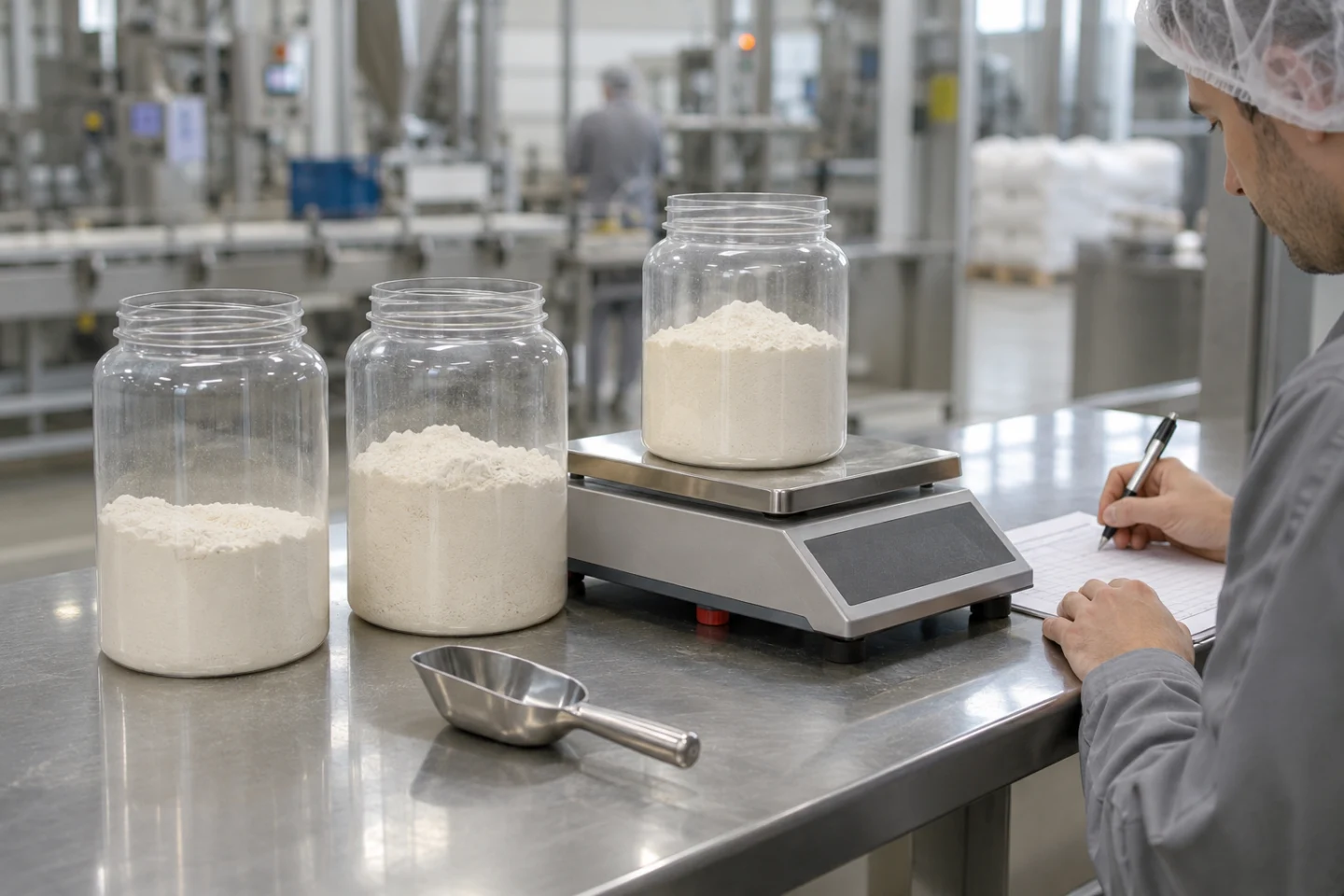
- Use the actual product, minimum and maximum dose and intended packaging.
- Define tare handling, measurement equipment, target and acceptable range before testing.
- Record start-up, continuous running and restart separately.
- Note hopper level and batch; do not merge different conditions into one unexplained result.
- Inspect dust around the opening, contamination in the sealing area and product loss.
What information is needed to specify a powder filler?
Start with samples, dose range, container opening, required acceptable packs per hour, cleaning needs and acceptance criteria. Declare combustible-dust, allergen or special hygiene requirements early; PLC adjustments alone cannot resolve these design issues.
If the package must also be formed by the machine, read the vertical versus horizontal packaging comparison. Kedi Machine can assess a new filling arrangement or the PLC/HMI and weighing sequence on an existing machine. Product trials and clear acceptance criteria are more useful than a vague high-accuracy claim.