How to Choose a Liquid Filling Machine for Your Product
Compare liquid filling methods for water, oil, shampoo and cream. A practical guide to foaming, output, fill checks and product trials.
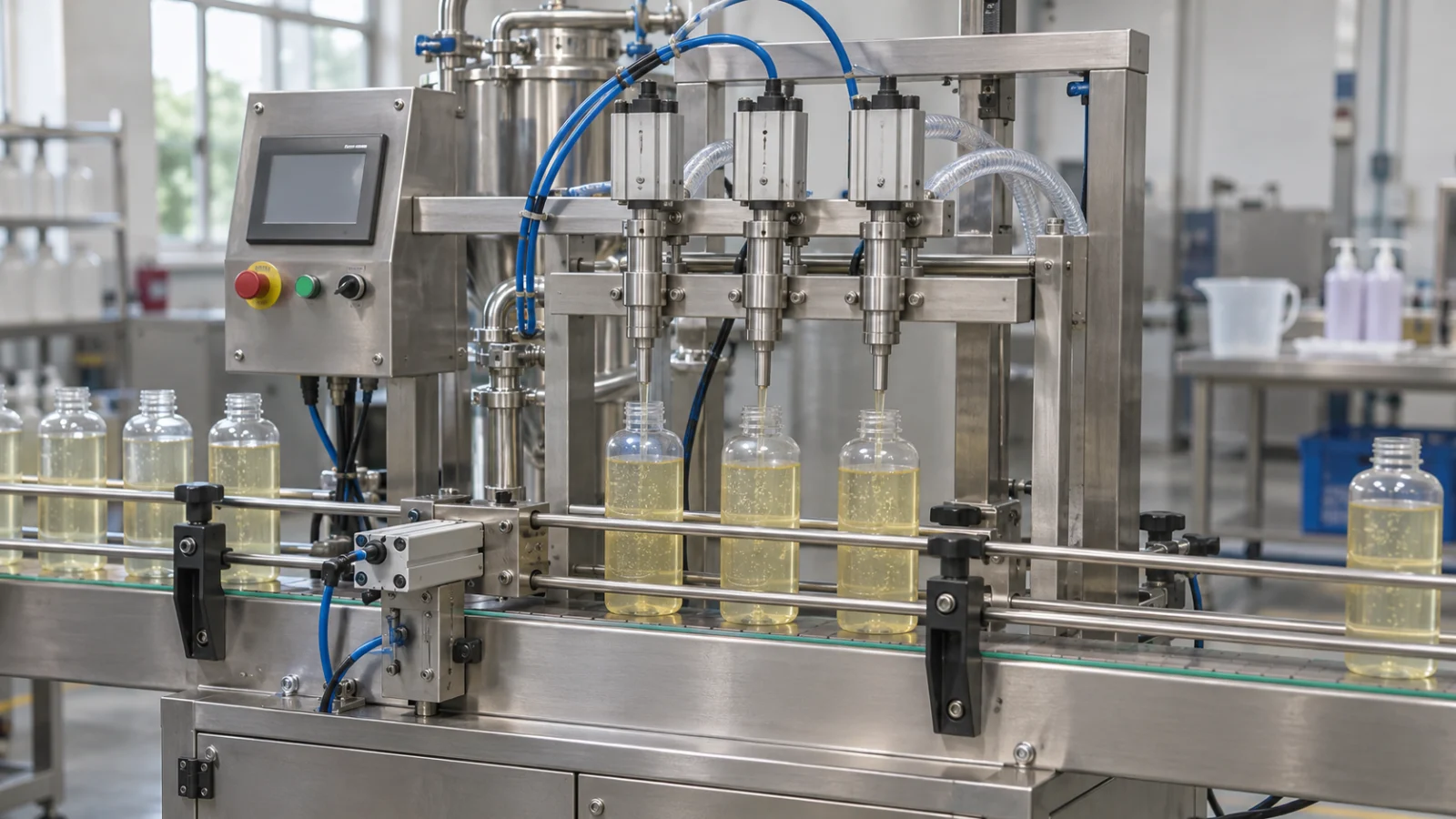
Choose a liquid filling machine around the product, container and required good output. A water-like liquid, a thick cream and a foaming shampoo behave differently. A trial using your actual product and packaging is more useful than comparing headline bottles-per-hour figures alone.
This guide helps narrow the specification before requesting a quotation. The method suggestions are starting points, not a guarantee that a particular pump, seal or nozzle will suit your formulation.
Can one filler handle water, oil and shampoo?
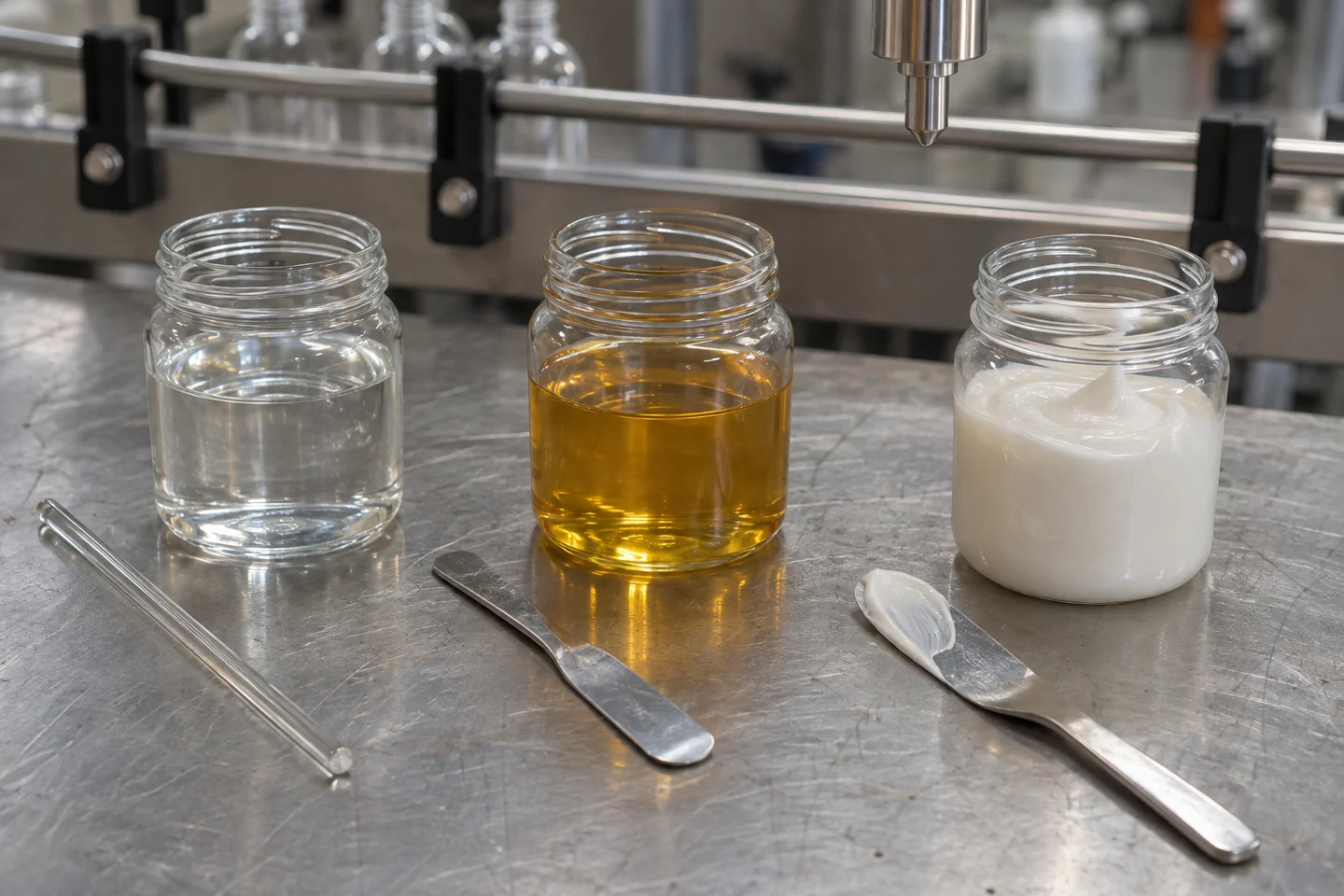
Some machines can handle several products after a changeover. That does not mean they use the same wetted parts or deliver the same speed for every product. Ask what changes when you move between recipes.
- Thin liquids: Gravity, suitable pump or flow-meter-based systems may be candidates. Test sensitivity to supply conditions.
- Oils: Consider compatible pump, piston or measurement-feedback arrangements. Check the end-of-fill drip.
- Shampoo and cream: Product feeding, flow passages and controlled shut-off become important. State the filling temperature.
- Products with particles: Specify particle size, fragility and valve passage requirements rather than only describing the liquid as thick.
Piston, pump or weight filling: what is the difference?
A piston doses a displaced volume. A pump filler may instead be controlled by time, revolutions or separate measurement feedback. “Pump filling” therefore does not describe accuracy by itself. Filamatic's piston pump brochure explains the relationship between piston travel and volume.
Weight filling targets net mass. Container tare, stable weighing and product still falling after shut-off matter. Grams and millilitres are not interchangeable: checking a volume by weighing requires the product density at the relevant temperature.
With peristaltic filling, tubing compatibility and pump-head fit form part of the specification. Frequent product changes make the product path and consumables worth reviewing together. The Flexicon product information illustrates model-specific tubing choices; no single tube should be assumed suitable for every formulation.
Does a foaming product need bottom-up filling?
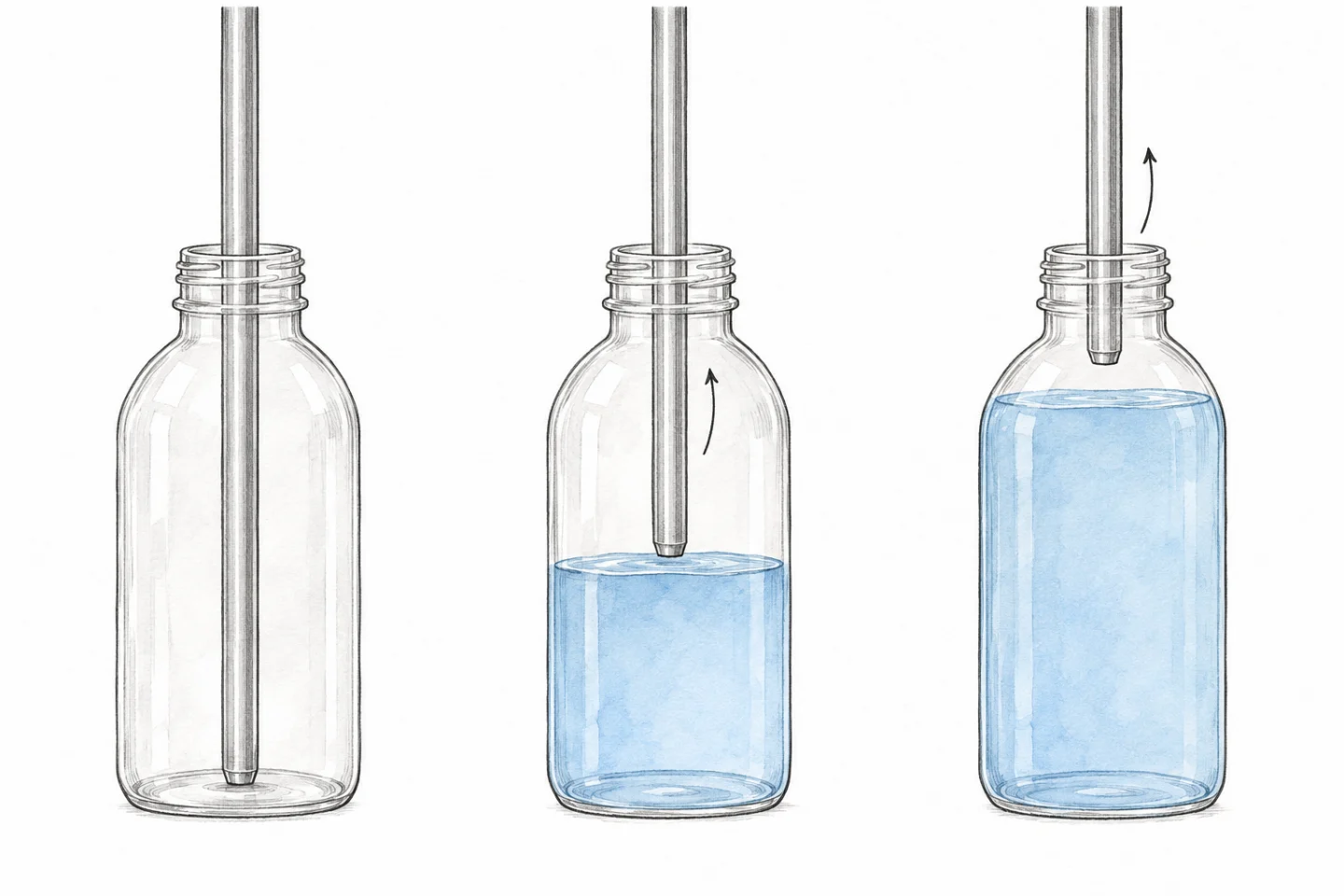
A diving nozzle enters the container and rises during filling. Reducing free fall and splashing can help manage foam; see the manufacturer's explanation in Filamatic's filling questions. Air already in the supply, unsuitable speeds or poor feeding can still cause problems.
Inspect the result after the foam settles, not just during dispensing. Check overflow, residue around the neck and measured fill. Equal visible levels do not prove equal volume in containers with differing internal dimensions.
How much capacity do you actually need?
Planning example: If you need 4,800 acceptable bottles in a shift with six hours available for production, the line must average 800 good bottles per hour. This is a requirement calculation, not a machine performance claim. Feeding, capping, labelling, cleaning and stops all affect the outcome.
Ask for a rate tied to your product, container and fill size. A fast water demonstration does not establish the guaranteed speed for a thick formulation.
What should a product trial include?
- Your smallest and largest containers, actual product and normal temperature.
- Consecutive measured fills during start-up, supply changes and restarting. Record variation as well as the average.
- Nozzle alignment, container stability, bottle holding and end-of-fill dripping.
- Time for disassembly, cleaning, reassembly and adjustment. A CIP system is a defined cleaning arrangement; a stainless exterior alone does not establish cleanability.
What information belongs in a filling-machine enquiry?
Provide product properties, filling temperature, dose range, acceptance criteria, container dimensions, cap type and required good bottles per hour. Add the available space and photographs of the existing line. This makes the discussion about process suitability rather than price alone.
Kedi Machine can assess a filling-machine project around your product. If your existing equipment is mechanically suitable, we can also provide PLC and HMI software support without requiring you to buy a new machine.